
I see the world as a biological system.
Within such a living structure, every element has a role comparable to that of an organ within a living organism. Societies, economies, political structures, technological systems, and cultural frameworks are not isolated phenomena; they function as interconnected components within a larger living whole.
This also means that every element carries both constructive potential and systemic risk.
If civilization is understood as a living system, its major structures can also be interpreted through functional analogies similar to those found within biological organisms. Communication networks resemble a kind of planetary nervous system through which information, reactions, and collective impulses travel at immense speed. Energy infrastructure, transportation routes, global logistics, and even the financial sector function much like circulatory systems that distribute the resources necessary for stability, coordination, and survival. The natural world — forests, oceans, ecosystems, and atmospheric cycles — operates as a regenerative respiratory structure maintaining the balance of the whole. Societies also develop protective and self-correcting mechanisms — functioning in many ways like an immune system — intended to preserve internal stability when confronted with disruption, disorder, or systemic stress.
What makes this perspective important is not merely the metaphor itself, but the realization that no element exists in true isolation. Damage within one subsystem can propagate throughout the entire structure, just as dysfunction within a living organism rarely remains local. A disturbance in one area may eventually destabilize systems far beyond its apparent point of origin.
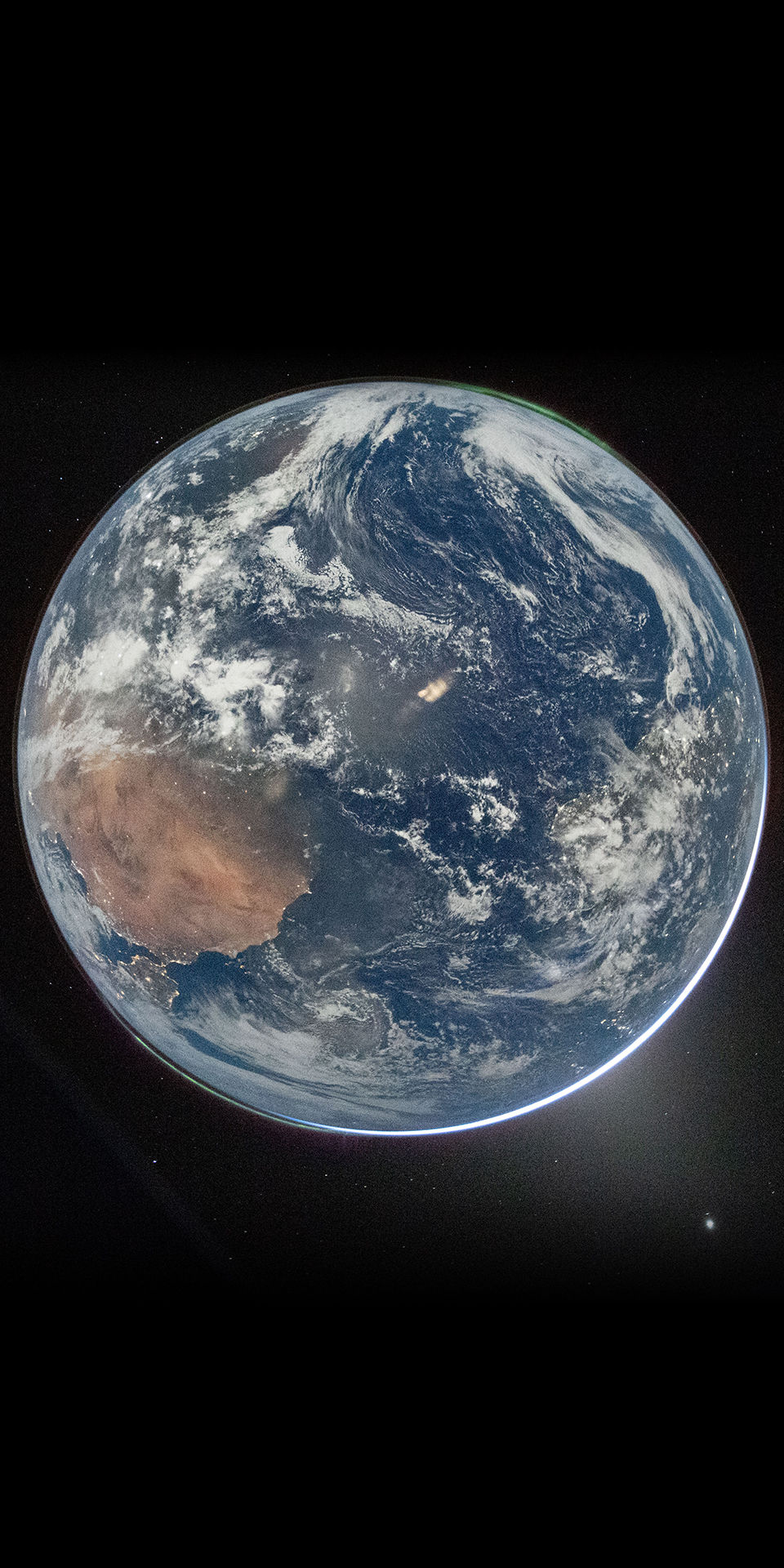
This perspective becomes especially visible when Earth is imagined from a distant point in the universe. From that perspective, the whole world appears not as fragmented nations, competing ideologies, or separate economic interests, but as a single interconnected system. The planet is not only physically spherical; its operation is structurally circular, interdependent, and deeply connected across multiple layers of existence.
For this reason, protecting the integrity of Earth’s systems is not an abstract moral principle, but a condition of long-term survival. Ecological destruction, systemic instability, uncontrolled technological disruption, informational fragmentation, or the erosion of institutional balance are not isolated events; they are symptoms affecting the health of the entire organism.
I believe this logic extends across every scale of existence — from organic molecules and living cells to planetary systems and, ultimately, to the ontological structure of the universe itself.
This is how I perceive reality: not as isolated dimensions or independent structures, but as a multidimensional, interconnected unity in which stability depends on balance, responsibility, and the continuous interaction of all parts.
Photo from NASA Artemis mission
Modernism, as I Define It
I have considered myself a modernist for more than a decade — long before I began writing Responsio.
By modernism, I do not mean the artistic or historical definition of the term. I use it to describe a personal philosophical framework that attempts to reconcile ideas which contemporary societies increasingly force into opposition.
This perspective does not reject the importance of tradition, family, community, or value-based thinking. At the same time, it keeps distance from rigid hierarchies, dogmatic worldviews, and systems that attempt to subordinate human existence to absolute ideological or metaphysical authority.
It also incorporates elements often associated with liberal thought: the protection of individual freedom, openness toward new ideas, rational inquiry, and scientific thinking. However, I believe freedom only remains sustainable when balanced with responsibility toward others and with the long-term stability of society itself.
For this reason, I never felt that conventional political labels such as “conservative” or “liberal” accurately described my worldview. In my view, these categories increasingly function less as tools of understanding and more as instruments of division, simplification, and social fragmentation.
The figure of Harold Wise emerged partly from these ideas.
He is not a direct representation of myself, but many of the philosophical tensions explored through his character originate from questions I have been thinking about for years:
the relationship between freedom and order,
science and meaning, technological progress and human stability, individual autonomy and systemic responsibility.
Both my essays and Responsio attempt to explore whether a more rational, balanced, and structurally sustainable approach to civilization is still possible.